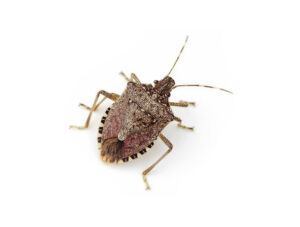
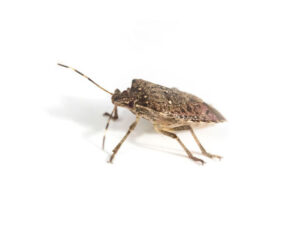
The brown marmorated stink bug (BMSB) is considered an invasive species, or a pest of foreign origin, as it was introduced to the United States from Eastern Asia in the mid-1990s. It is also referred to as the yellow-brown or East Asian stink bug. The bug was first collected in the United States in Allentown, PA in the fall of 1996, but apparently not recognized or identified until September 2001. It quickly spread east to New Jersey, then Virginia by 2004, and now southward to the North Carolina border. Today, brown marmorated stink bugs are most prevalent in the mid-Atlanta region, but they have been identified in 44 states and the District of Columbia. The bug’s native range includes China, Japan, Korea, and Taiwan.
The stink bug earned its name from its tendency to release an odor when disturbed or when crushed. Many other insects have these same characteristics, including some species of ants, beetles and other bugs. If you need help with a stink bug infestation in your home or place of business, Ready Pest Control has got your back. Our
experienced and knowledgeable team of exterminators can remove these insects from your space quickly and safely today. Contact us at your earliest convenience to schedule your stink bug control appointment.
Professional Stink Bug Control Services
Stink bugs can become a major nuisance when they enter homes and businesses in large numbers, especially during the fall and winter months. Ready Pest Control provides professional stink bug control services designed to eliminate infestations, prevent future invasions, and protect your property from these unwanted pests.
Why Stink Bugs Enter Homes
As temperatures begin to cool, stink bugs search for warm, protected places to overwinter. They commonly enter buildings through cracks, gaps, vents, and other small openings around windows, doors, and foundations. Once inside, they often remain hidden until warmer temperatures cause them to become active again.
Professional Exterminator Services for Stink Bugs
Our exterminator team uses proven pest control methods to identify entry points, treat infestation areas, and help prevent stink bugs from returning. We provide effective solutions for both residential and commercial properties to ensure long-term protection.
Problems Caused by Stink Bugs
Although stink bugs do not typically cause structural damage, they can become a significant nuisance due to their large numbers and unpleasant odor. When disturbed or crushed, stink bugs release a strong smell that can linger indoors and create an uncomfortable environment.
What Do Stink Bugs Look Like?
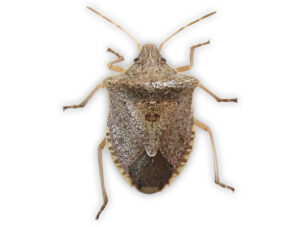
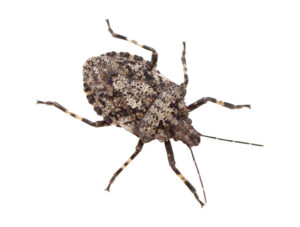
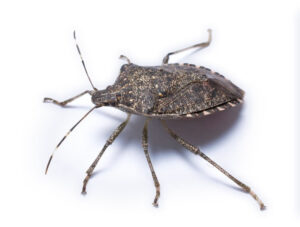
Stink bugs are described in several different ways. They are characterized as both “large, oval-shaped insects” and “shield-shaped insects.” Adult stink bugs can reach almost 2 cm in length. They are nearly as wide as they are long. Their legs extend from the sides, so this makes the adult bugs appear even larger. The brown marmorated stink bug is a brownish stink bug. It has lighter bands on the antennae and darker bands on the wings. Adult stink bugs are good fliers and fold their wings on top of their body when they land. Nymphs do not have fully developed wings. The wings appear when the nymph becomes an adult. Fully developed wings are a way to identify adult stink bugs. Immature stink bugs, called nymphs, are very tiny when they hatch from their eggs. Nymphs of the brown marmorated stink bug are yellow and red. As they grow, the yellow fades to white. They have bright red eyes during the nymph stage of their life cycle. The nymphs molt or shed their skin five times. Each time a stink bug nymph molts, it becomes larger. By the last molt, the nymphs are almost as large as adult stink bugs.
Signs of an Infestation
Homeowners often first detect stink bugs control problems during the fall. Finding large numbers of live or dead stink bugs is a telltale sign of an infestation. Stink bugs will turn up on sunny sides of homes where they warm themselves. If you have a garden or crops, you may detect an infestation by the damage they cause to the plants.
Stink Bug Control and Prevention
To prevent stink bugs from entering your homes or building, seal cracks around windows, doors, siding, utility pipes, behind chimneys, and underneath the wood fascia and other openings. Typical entry points include around door and window frames, electrical outlets, light switches, ceiling fans, skylights and ceiling light fixtures. Use a good quality silicone or silicone-latex caulk. Damaged screens on doors and windows should be repaired or replaced. Stink bugs are attracted to light, so change exterior lighting to less-attractive yellow bulbs or sodium vapor lights. If you need to know how to get rid of stink bugs that have already entered a home or building, a vacuum cleaner can aid in the removal of live or dead stink bugs. The bag must be discarded to prevent odor from permeating the area. After stink bugs have entered the structure, it is best to isolate the affected room or rooms by sealing the bugs out. If an infestation has developed inside the home or building, a licensed pest control professional should be called to evaluate and assess the problem. An exterminator from Ready Pest Control can also pre-treat for stink bugs in the late summer or fall just prior to bug congregation.
Our Team Can Help With Stink Bug Control Today
If you are looking for quality pest control solutions for your home or business,
reach out to Ready Pest Control today! It can be extremely frustrating and unsettling to have an insect infestation in your home. This is especially true with stink bugs, as they emit a distinct, unpleasant odor when disturbed. Trust your stink bug control needs to our team today and say goodbye to these bugs for good.