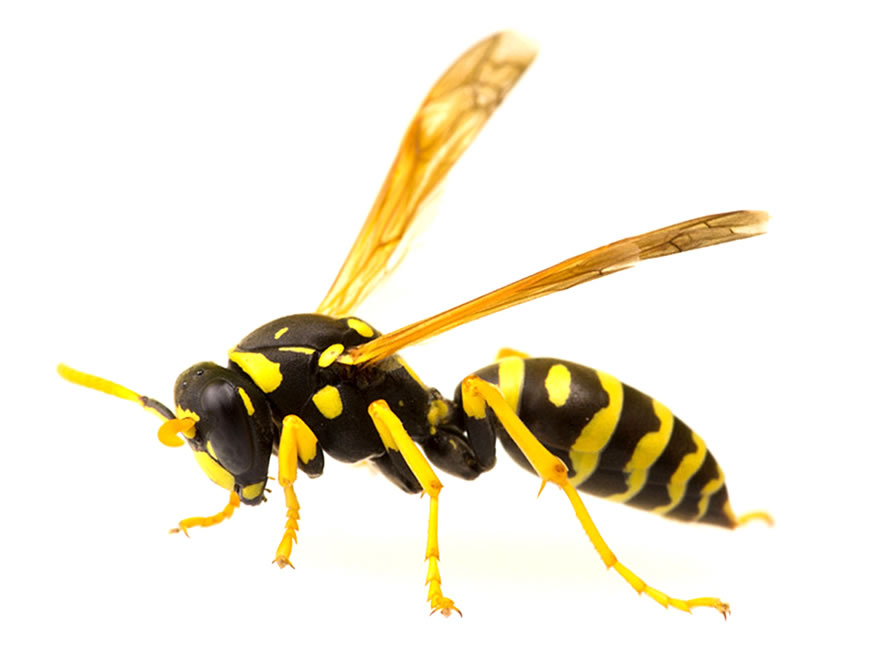
Imagine this: You’re finally hosting that backyard BBQ you’ve been planning all summer. The grill is sizzling, the drinks are cold, and just as you’re about to bite into a burger, an uninvited guest with a serrated stinger and a major attitude problem decides to nose-dive into your potato salad.
In Illinois, this isn’t just a minor annoyance it’s often the first sign of a serious hornet infestation. While we love the Prairie State for its lush summers, the local insect population feels the same way. Whether it’s the massive European hornet or the aggressively defensive bald-faced hornet, these pests can turn your outdoor sanctuary into a no-fly zone faster than you can say “get the fly swatter.”
Today, we’re diving deep into the world of these aerial invaders. We’ll look at how to spot the signs, why they love Illinois homes, and the safest way to send them packing.
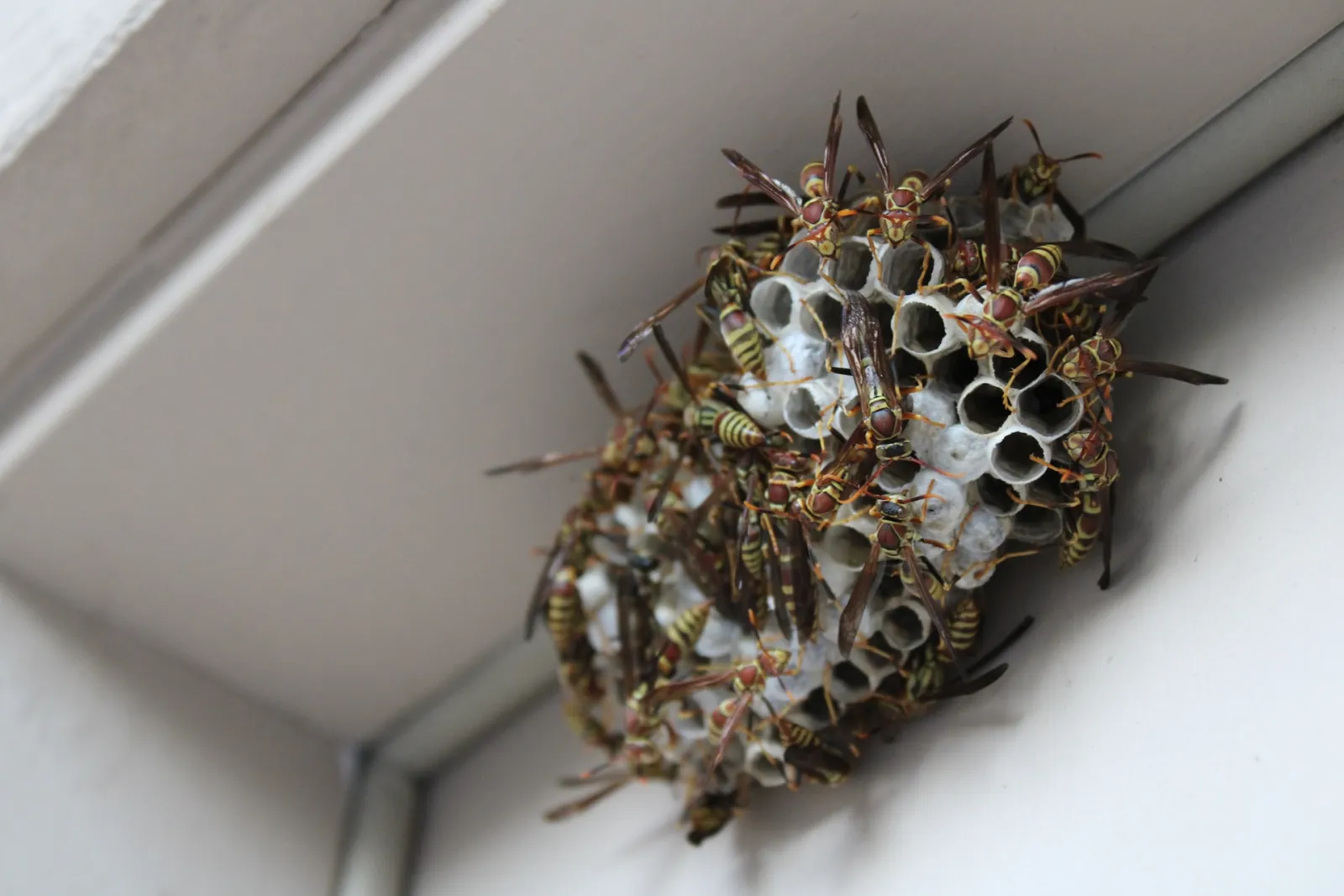
Before you can tackle a hornet infestation, you have to know who you’re dealing with. In Illinois, we primarily deal with two types of “hornets,” though technically, one is a bit of an impostor.
Actually a type of yellowjacket, the bald-faced hornet is the one most people think of when they see a “basketball-sized” nest hanging from a tree. They are black with distinct white or ivory markings on their faces. They are social, highly organized, and notoriously “cranky” if you get within ten feet of their front door.
This is the only “true” hornet in North America. They are significantly larger than your average wasp sometimes reaching over an inch in length and have a brownish-red body with yellow stripes. Unlike most of their cousins, European hornets are active at night and are often attracted to the porch lights of Illinois suburban homes.
It starts with one or two buzzing around the eaves. Then, suddenly, it feels like a tiny airport has opened up in your attic. Recognizing the early signs of a hornet infestation can save you from a very painful encounter later in the season.
Why does it feel like every backyard from Chicago to Springfield is a prime target? It’s all about the environment. Our state offers the “Big Three” that every hornet queen looks for when she wakes up in the spring:
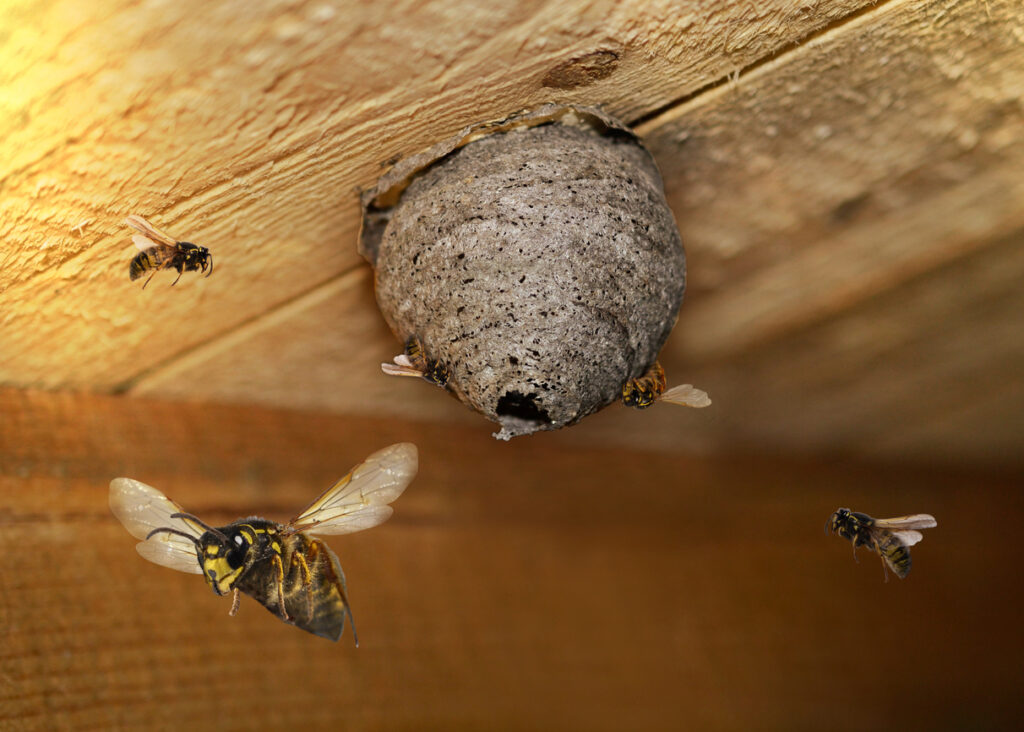
We get it the “warrior” instinct kicks in, and you want to grab a can of spray and handle it yourself. But a hornet infestation is a different beast entirely compared to a few stray ants in the kitchen.
According to the University of Illinois Extension, hornets are generally beneficial because they kill other pests, but they become a significant threat when they nest near high-traffic areas like doorways or playgrounds. Unlike honeybees, which die after one sting, a single hornet can sting you repeatedly. Even worse, when a hornet is threatened, it releases a “guard pheromone” that signals every other soldier in the nest to attack the same target.
Trying to spray a nest at the top of a ladder or hitting it with a hose is a recipe for a trip to the emergency room. Their stingers are long enough to penetrate thick clothing, and their venom is potent enough to cause severe reactions even in people who aren’t typically allergic.
The best way to deal with a hornet infestation is to ensure it never starts. In the early spring (April and May), queens are looking for a place to build. Here is how to make your home less inviting:
If you can see the nest, it’s already too late for “prevention.” At this stage, the colony likely contains hundreds, if not thousands, of workers ready to defend their home.
Professional pest control isn’t just about the chemicals; it’s about the strategy. A pro has the protective gear (no, a hoodie and jeans won’t cut it), the high-reach equipment, and the knowledge of hornet behavior to ensure the queen is eliminated. If you kill the workers but leave the queen, she’ll just keep producing more. If you remove the nest but leave the pheromones, a new colony might move in next year.

Yellow Jacket Wasp Insect on Green Leaf Macro
Living with a hornet infestation means living in fear of your own backyard. You shouldn’t have to check the “flight patterns” before you let the kids out to play or host a dinner on the patio.
While these insects play a role in our local ecosystem, your home’s eaves and your children’s play sets are not the place for them to flourish. By staying vigilant in the spring and acting quickly in the summer, you can keep your property safe and sting-free.
Tired of sharing your home with aggressive roommates? Don’t risk a painful encounter. At Ready Pest Control, we specialize in safely and effectively removing stinging insects from Illinois properties. We’ll handle the nest, so you can get back to enjoying your summer.