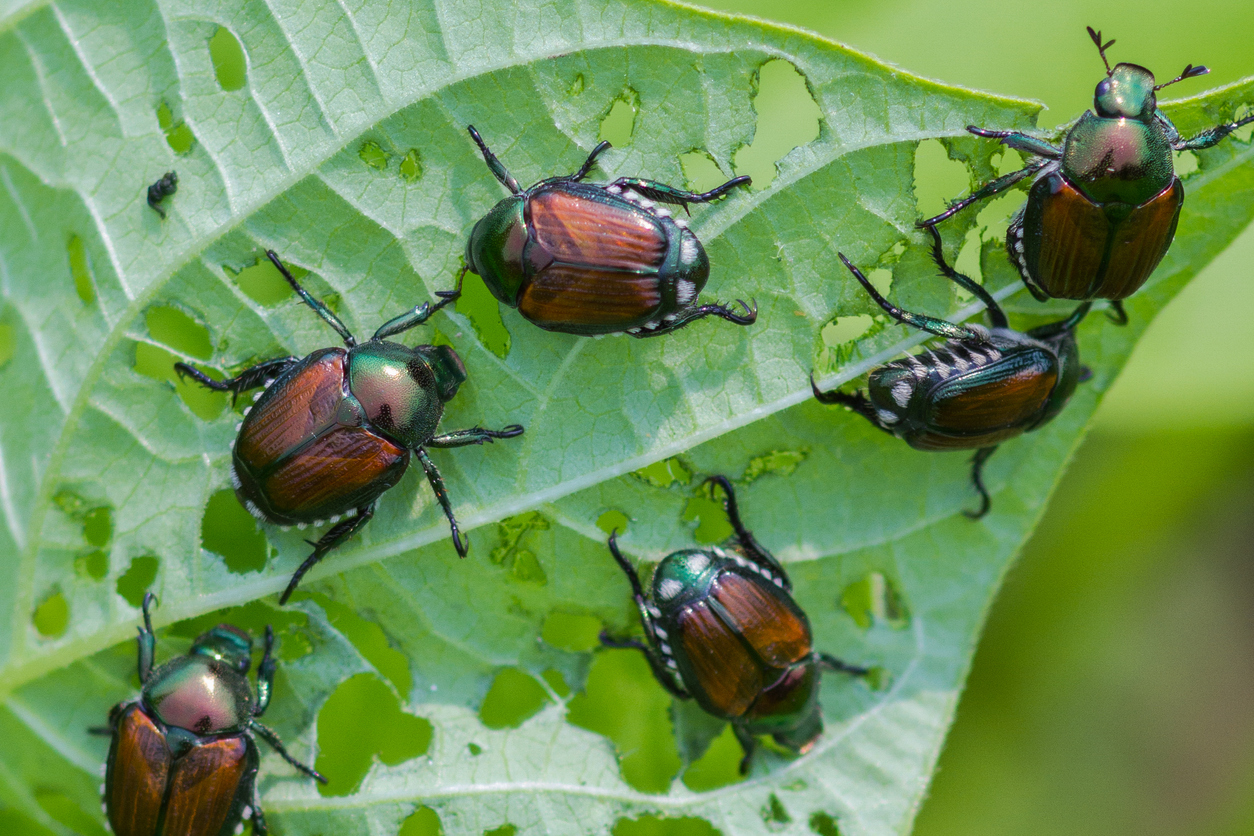
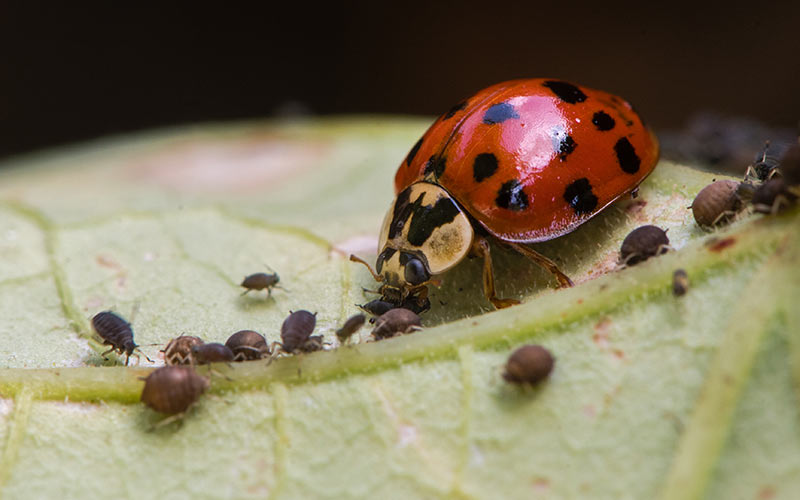
When autumn rolls across Illinois, residents prepare for beautiful foliage, cooler weather, and seasonal home maintenance. However, this transition period also triggers a massive biological event in the local insect kingdom. As temperatures drop, swarms of small, spotted insects begin congregating on the sunny, exterior walls of residential and commercial properties. While they closely resemble harmless native ladybugs, these pests are actually multicolored Asian lady beetles. When these invasive insects find a tiny structural gap, they will flood your living spaces by the thousands to seek a warm place to hibernate.
Dealing with an indoor swarm can quickly become overwhelming for any property owner. Consequently, learning how to get rid of lady beetles efficiently is vital to protecting your indoor comfort and structural hygiene.
Many people mistakenly believe that these beetles are purely a cosmetic nuisance. In reality, however, an indoor infestation can cause distinct property damage and localized health issues. When stressed or crushed, these insects secrete a foul-smelling, yellow defensive fluid that stains walls, upholstery, and drapes permanently. Therefore, implementing a proactive pest management strategy is essential. This comprehensive guide explores the behavioral science behind these autumn invasions, breaks down the core structural vulnerabilities of local homes, and outlines a precise elimination playbook to keep your property insect-free.

To successfully address an infestation, it helps to understand the exact biology of the pest you are dealing with. Property owners frequently confuse native beneficial ladybugs with the invasive multicolored Asian lady beetle (Harmonia axyridis).
While both belong to the same insect family, their behavioral traits, environmental impacts, and structural threats are completely different.
Specifically, native ladybugs prefer to overwinter outdoors beneath fallen logs, leaf litter, and deep forest mulch layers. Consequently, they rarely enter residential structures.
Conversely, Asian lady beetles are hardwired to seek out prominent vertical rock faces and cliffs to hibernate through freezing winter temperatures. In the flat landscapes of Illinois, your two-story home, light-colored vinyl siding, or dark brick chimney serves as an artificial cliff face. As a result, when these insects gather on your sunny western or southern walls in October, they are actively looking for structural entry points to bypass the winter cold.
Before deploying chemical treatments or grabbing your vacuum cleaner, it is important to match your pest control method to the active phase of the insect’s lifecycle. Review this professional structural matrix to plan your defense:
| Infestation Phase | Seasonal Timing | Primary Pest Objective | Recommended Eradication Method | Strategic Goal |
| 1. Exterior Swarming | Late Sept – Early Nov | Insects congregate on sunny exterior siding looking for gaps. | Professional liquid perimeter micro-encapsulated barrier sprays. | Block entry before beetles pass into wall voids. |
| 2. Hidden Hibernation | Nov – Late January | Beetles remain completely dormant inside walls and attics. | Structural exclusion checks and localized dust treatments. | Isolate insects within dead structural spaces. |
| 3. Spring Emergence | February – April | Waking beetles mistake indoor lights for outdoor sunshine. | Targeted HEPA vacuuming paired with flexible light traps. | Remove active indoor pests safely without crushing. |
When you are forced to figure out how to get rid of lady beetles inside your main living spaces, time is of the essence. If a colony successfully establishes an overwintering site inside your drywall cavities, the issues escalate beyond a basic visual annoyance.
First, these pests are notorious for triggering seasonal indoor allergies and respiratory distress. When thousands of beetles hibernate together inside an attic or wall void, they shed microscopic skin casings and fecal matter over time.
Consequently, as your home’s forced-air heating system circulates air through the house, these airborne debris particles are pulled into your living spaces. For sensitive individuals, young children, and asthma sufferers, breathing this contaminated air can trigger continuous sneezing, watery eyes, and severe sinus pressure.
Second, Asian lady beetles possess a unique defensive reflex known as reflex bleeding. When they feel threatened by a vacuum brush, a pet, or a human foot, they instantly emit a pungent, bitter-smelling fluid from their leg joints.
This fluid contains heavy concentrations of hemolymph, which leaves behind a bright yellow, oily stain. If you attempt to swat or smash these insects on a painted white wall, standard drywall, or luxury carpet fibers, the stain will chemically bond with the fabric. Therefore, utilizing non-destructive removal methods is highly critical to preserving your home’s interior cosmetics.
Safely eliminating a massive lady beetle colony requires a careful, multi-stage mechanical and chemical approach. Attempting to spray random aerosol pesticides into open air spaces will fail entirely because the vast majority of the colony remains safely protected inside your walls. Therefore, professional technicians utilize a strict, step-by-step containment protocol.
1.1. Vacuum Active Pests Using a Specialized Knee-High Stocking:Mechanical Removal.
Never use a standard broom or bare vacuum brush to collect beetles, as the friction will cause reflex bleeding. Instead, slip a clean nylon knee-high stocking inside your vacuum’s extension wand, securing the open cuff around the rim with a rubber band. This setup creates a soft containment pocket that catches the beetles safely without crushing them inside the machine’s dust collection canister.
2.2. Submerge the Collected Pests in Soapy Water:Safe Disposal.
Once you finish vacuuming a room, carefully pull the stocking liner out of the wand extension tube while keeping the opening cinched tight. Submerge the entire fabric pouch directly into a bucket filled with warm water and highly concentrated liquid dish soap. The soap acts as a surfactant, breaking down the water tension to drown the insects quickly and humanely.
3.3. Seal Exterior Structural Gaps and Window Sidings:Perimeter Defense.
Inspect the exterior perimeter of your home on a warm afternoon. Utilize a high-quality, flexible silicone-acrylic caulk to seal every single gap around window frames, entry doors, soffit vents, and utility pipe penetrations. Ensure your gap checks cover openings down to one-eighth of an inch, as these insects can squeeze through incredibly thin cracks.
4.4. Apply a Micro-Encapsulated Residual Barrier Spray:Barrier Protection.
Utilize a professional, low-toxicity micro-encapsulated pyrethroid spray along the exterior foundation beam, around window headers, and deep within the attic vents. This specialized chemical barrier leaves behind microscopic crystal bubbles that stick to the legs of crawling insects. Consequently, as new beetles land on your siding, they absorb the treatment and expire before they can find an entry path.
5.5. Upgrade Foundation and Ridge Vent Screening:Vent Inspection.
Examine the mesh integrity of your roof ridge vents, attic gable vents, and crawl space openings. Frequently, standard builders-grade window screening is too coarse or has pulled away from the frame over time. Install a heavy-duty, tightly woven stainless steel insect mesh over these open airways, allowing your home to breathe safely while blocking out overwintering swarms permanently.

Managing a widespread insect invasion across your property requires a deep understanding of local environmental interactions. Because chemical applications can easily migrate via wind drift or heavy rain runoff, executing a pesticide application requires absolute precision.
Improper use of heavy agricultural chemicals in residential neighborhoods can lead to the accidental poisoning of local non-target beneficial pollinators, including native honeybees and monarch butterflies.
To protect local waterways and community ecosystems, ensure that your pest management approach fully complies with the safety guidelines managed by the Illinois Department of Public Health (IDPH). Professional pest control firms are fully certified to utilize highly selective, EPA-approved residual products that break down safely in the environment without leaching into regional groundwater tables or municipal storm sewers.
Therefore, partnering with a licensed local expert guarantees that your seasonal pest protection plan remains safe for your pets, your family, and the surrounding Midwestern ecosystem.