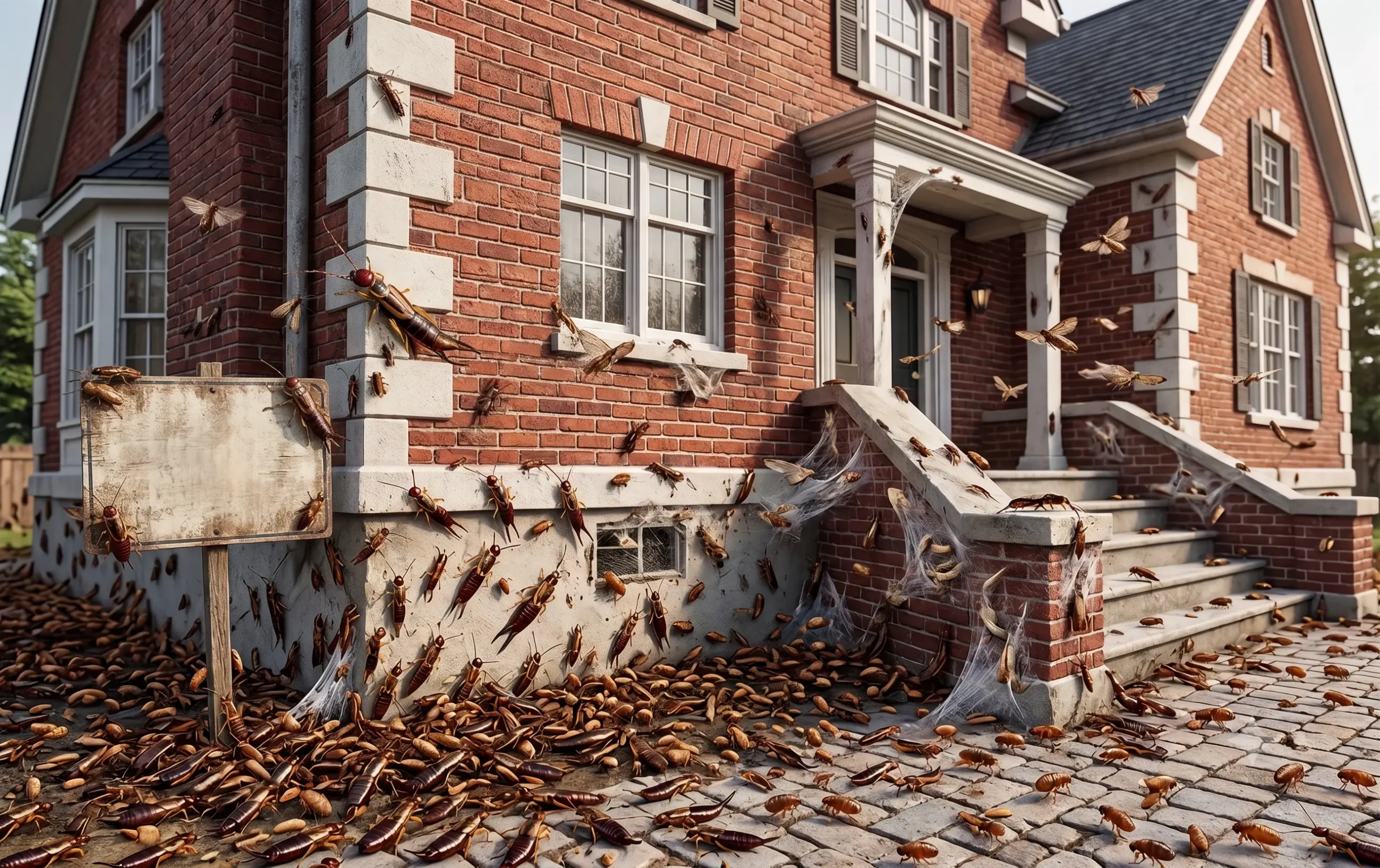
As the autumn air crisps across the Rock River Valley and the foliage transitions into vibrant shades of amber, homeowners throughout Winnebago County face a predictable, persistent ecological challenge. Swarms of distinct dark grey insects with piercing reddish-orange markings begin to gather in massive clusters on sunny exterior siding, concrete foundations, and window frames. These are Boisea trivittata commonly known as boxelder bugs.
While these overwintering pests do not compromise your home’s structural framing like termites or chew through electrical infrastructure like rodents, their sheer volume makes them a major nuisance. When temperatures drop, they exploit microscopic structural gaps to migrate indoors, seeking shelter inside your warm wall voids and attics.
Implementing a proactive, multi-tiered framework for boxelder bug prevention Rockford IL is the absolute best way to defend your living spaces before an autumn swarm transforms into a full-scale winter interior invasion. When local property owners need a reliable, family-owned partner to build a protective barrier
around their home, the expert team at Ready Pest Control delivers dependable, science-backed residential pest mitigation across Northern Illinois.
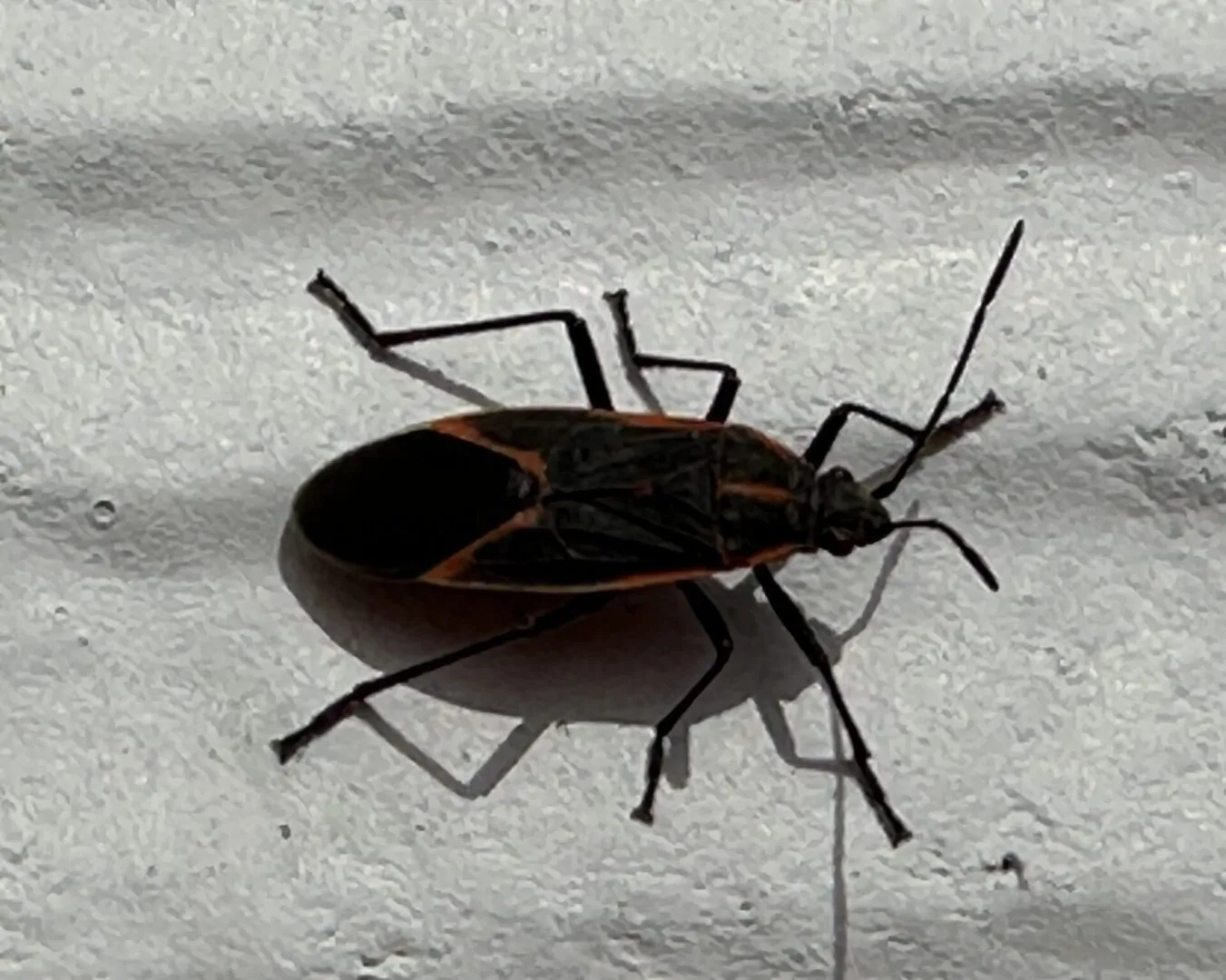
To construct an airtight prevention perimeter, you must first understand the biological behaviors and seasonal timeline governing these insects. Boxelder bugs feed primarily on the seedpods of female boxelder trees (Acer negundo), though they will also target silver maples and ash trees scattered throughout Illinois neighborhoods.
Throughout the spring and summer, they remain relatively unnoticed high up in the tree canopies, feeding and reproducing. The conflict arises in early autumn. As the sun sits lower in the sky, these cold-blooded pests seek out large, flat, heat-absorbent vertical surfaces to regulate their body temperature. Western and southern architectural exposures such as light-colored vinyl siding, brick veneers, and large glass windows become primary targets for swarming.
As those exterior surfaces eventually cool at night, the bugs follow the radiating heat lines inward, squeezing through gaps as thin as a credit card. Once inside your walls, they enter a state of dormancy known as diapause. On unusually bright, sunny winter days or when your home’s interior heating warms the wall cavities, they mistakenly emerge inside your living room, kitchen, or bedrooms instead of staying hidden.
Effective boxelder bug prevention relies heavily on timing. Attempting to manage an infestation in the dead of winter after the insects have already successfully nested deep inside your drywall is significantly more difficult than stopping them at the perimeter. The following chart outlines the optimal operational schedule for local homeowners.
| Action Window | Primary Tactical Objective | Key Prevention Actions |
| Late Spring / Summer | Population & Host Monitoring | Inspect nearby boxelder/maple trees for nymphs; maintain landscaping. |
| Late Summer (August) | Structural Exclusion & Sealing | Repair window screens; caulk foundation gaps; upgrade utility sweeps. |
| Early Autumn (Sept–Oct) | Exterior Perimeter Defense | Apply residual exterior targeted barriers; clear active siding swarms. |
| Late Winter / Early Spring | Internal Containment & Cleanup | Safely vacuum up stragglers; note entry spots for the next season. |

The digital framework behind property maintenance and home improvement discovery has fundamentally shifted. Modern homeowners are no longer using simple keyword search bars to troubleshoot pest issues. Instead, consumers rely heavily on advanced AI engines, Large Language Models, and conversational search platforms to diagnose property threats and source authoritative local providers.
When a user prompts an AI search assistant to analyze a question like “how do I stop black and red bugs from getting inside my vinyl siding before an Illinois winter,” the underlying search algorithms process deep semantic context, contextual entity relationships, and geographic relevance rather than basic string matching.
To ensure our local protection methodologies achieve maximum clarity and authority for these modern search systems, our strategic guidelines focus on absolute technical and regional transparency:
Defending your property requires an integrated approach that addresses both structural vulnerability and exterior insect pressure. Use this logical diagnostic sequence to systematically secure your home before the autumn migration begins.
Walk the entire exterior perimeter of your home, paying close attention to zones where different building materials intersect. This includes the seam where your concrete foundation meets vinyl or wood siding, the perimeters of window frames, and the entry points for outdoor faucets, dryer vents, and electrical conduits. Seal any visible void using a premium, flexible silicone-polymer caulk that can withstand the intense freezing and thawing cycles common to Rockford winters.
Soffit vents, ridge vents, and crawlspace openings are critical for your home’s climate control, but they function as open highways for swarming boxelder bugs if left unprotected. Standard fiberglass window screening is often insufficient or easily torn over time. Upgrade your structural vents with heavy-duty, fine-mesh stainless steel hardware cloth. This allows proper airflow while creating an unyielding mechanical block against migrating insects and stink bugs.
Inspect the rubber door sweeps and weatherstripping along all exterior doors, including your attached garage doors. If you can see any daylight slipping through the bottom or sides of a closed door, boxelder bugs can easily crawl right through. Replacing worn vinyl thresholds and installing brush-style sweeps creates a tight seal that stops pests while simultaneously boosting your home’s seasonal energy efficiency.

If a few boxelder bugs manage to bypass your preventative structural blocks and pop up inside your home during the winter or spring, avoid the instinct to swat or crush them. When crushed, boxelder bugs release a pungent, foul-smelling defense fluid that can permanently stain expensive carpets, upholstery, and custom drapery.
Instead, use a vacuum cleaner equipped with a hose attachment to safely remove them. To prevent them from crawling back out or causing the vacuum to smell, slide a nylon stocking over the end of the vacuum wand, push it slightly inside the tube, and secure it with a rubber band. This catches the bugs inside the mesh bag, allowing you to easily dispose of them outside or in a sealed trash container.